
The Case for Cats
Felines are derogated because they are feminine-coded

A quick reminder: everyone is of course welcome here, but paid subscriptions are what enable me to spend the necessary time researching and writing this newsletter. Thanks!
My father, who is a leading public intellectual in Australia, once agreed to an interview that turned out to be a hit piece. The interviewer and a camera crew came to my childhood home and interviewed him in the garden. Our cat Possum, a sphynx-like Cornish Rex with a permanently gimlet eye, weaved around his chair seeking petting during the conversation. My father, Robert Manne, was photographed with his cat slinking by in the corner of the frame. That was the picture the newspaper published, and it seemed snidely designed to discredit him—to contribute to the interview’s sense of him as arch, snide, and himself vaguely feline.
We laughed about it for years as a family. We know the truth not only about my father’s character—warm and humane, for the record—but also about cats. Cats are fundamentally great. And I have come to realize that felines are only discredited because of their association with all things feminine.
The association is an old one. In Ancient Egypt, cats were symbols of fertility, with the cat goddess Bastet presiding over childbirth and women’s secrets. In Norse mythology, the goddess Freyja—goddess of fertility, beauty, and love—rides around in a chariot pulled by two proud felines. During the 16th-century European witch trials, women who lived with cats were frequently a target. Their cats were depicted as familiars or even demons, thereby demonizing their female owners as practitioners of witchcraft. Fast forward to the twentieth century, and women holding cats were a common target of anti-suffragette propaganda. The trope of the “cat lady” was invented to make women who cared for their feline companions seem pathetic, lonely, and foolish.
And so it is today. “Cat lady” is a remarkably effective trope and tool of political dismissal. And it’s a weapon of the misogyny that, on my definition, functions to police and enforce women’s adherence to patriarchal norms and expectations. That means pouring all your time and energy and love as a woman into a male partner and your children. You are not allowed to care primarily for yourself, other creatures, or other women. The association between cats and childlessness, lesbianism, and loneliness is not only contemptuous: it’s a tool designed to get women back on the straight and narrow path of compulsory heterosexuality and childbearing.
The thing is, this ideology infects many people beyond the level of their conscious awareness. Many people who would never buy into this ridiculous scheme if they were aware of it nonetheless shy away from cats or project onto them negative qualities as the result of this cultural baggage. Cats hence have an undeserved reputation as haughty, indifferent, or even positively malevolent. It’s much the same reputation as feminists have long battled to shrug off. And it’s guilt by association twice over. Unruly women are tarnished by their association with cats; and cats are tarnished by their association with unruly women.
Many women have gone the other way and leaned into our “cat lady” reputations. When the sadsack pallbearer for patriarchy, J.D. Vance, was running for Vice President, the media unearthed his 2021 Fox News interview with Tucker Carlson. Vance complained that the country was being run by a “bunch of childless cat ladies” miserable with their own choices and determined to make the rest of the country miserable too. The uproar was palpable and made it to that ultimate cultural landmark: the tee shirt.
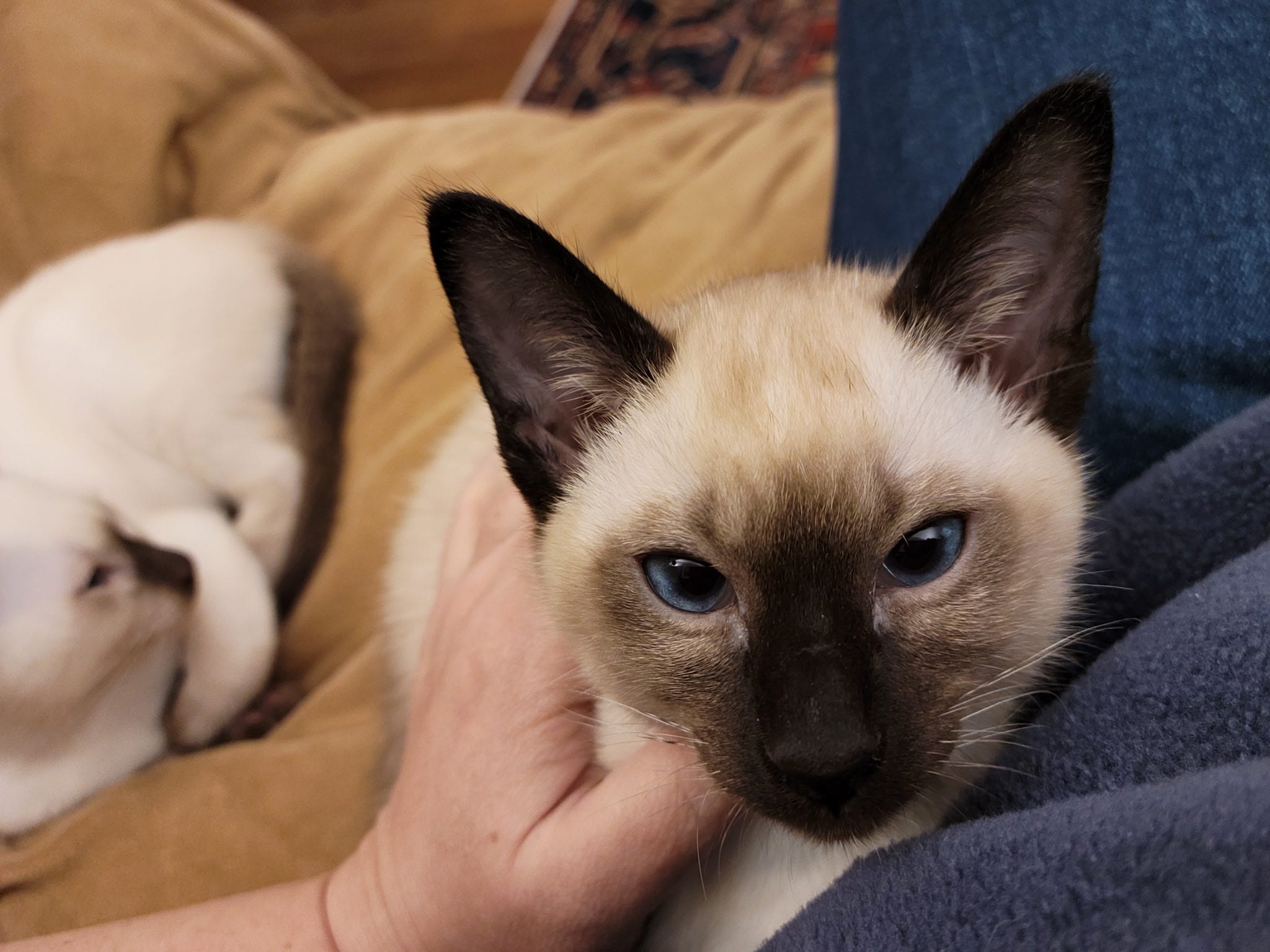
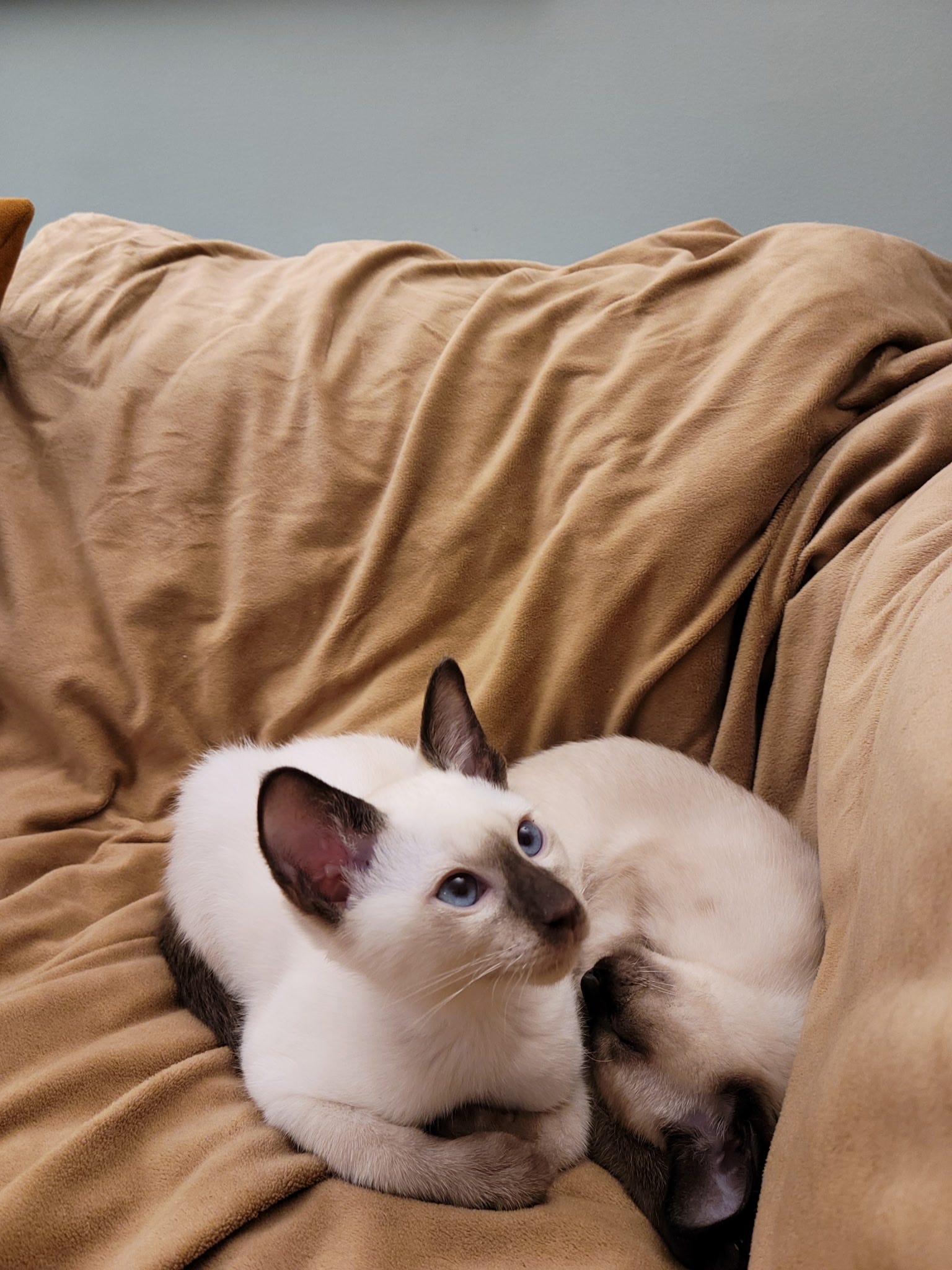
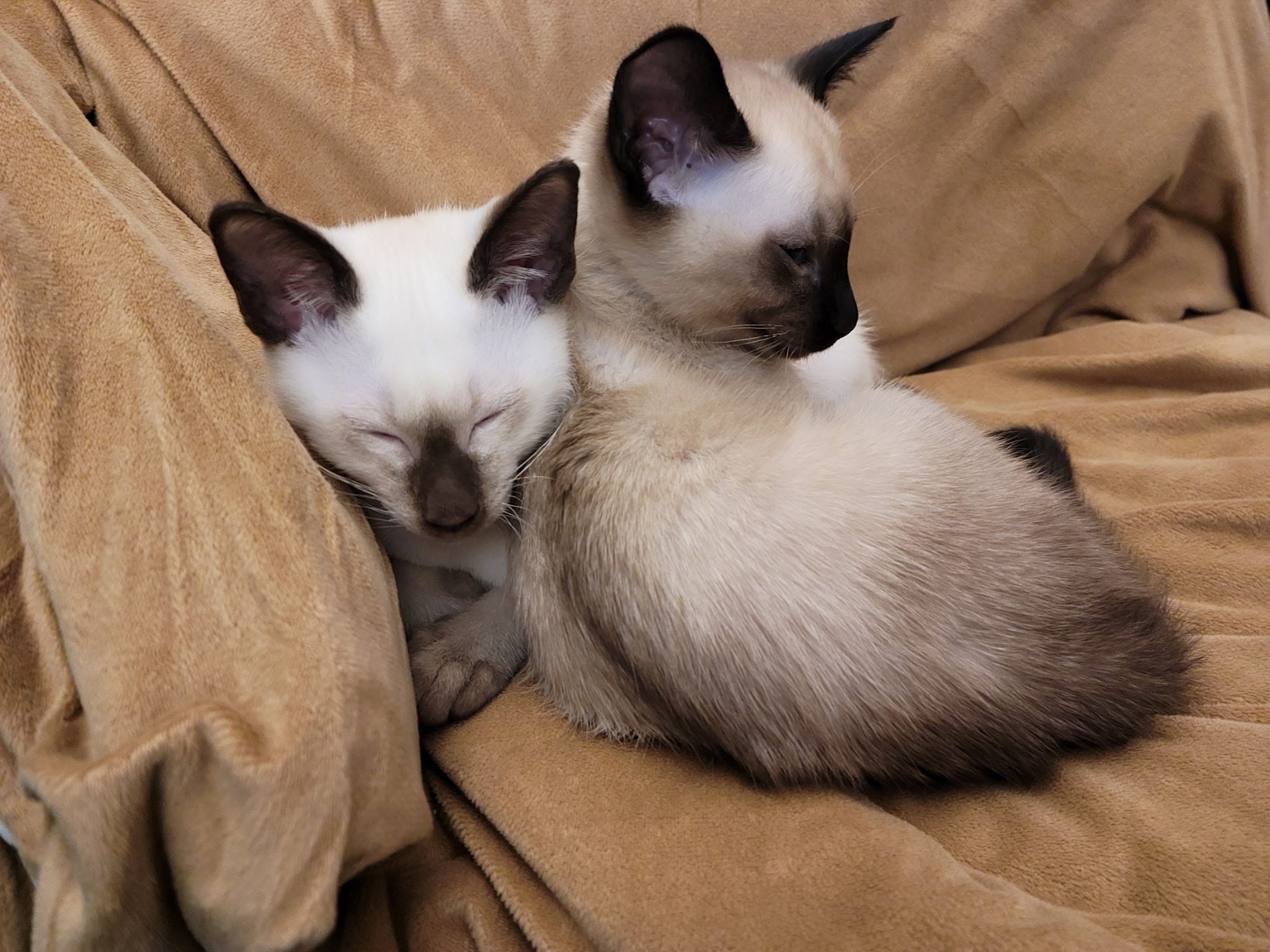
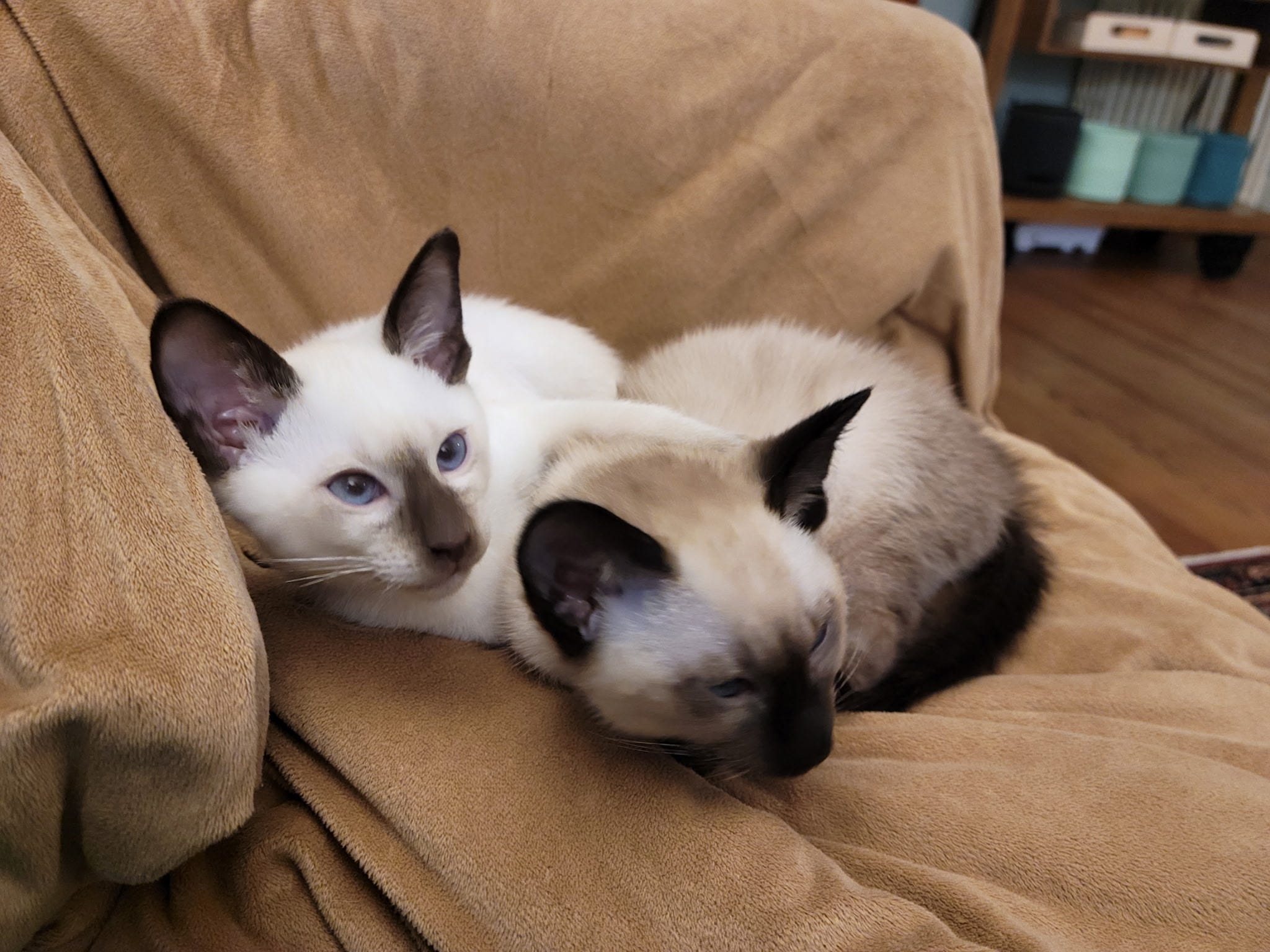
As ever, say the quiet part out loud and it can have the opposite of the intended effect, with many people realizing how silly and unfair and pernicious is some stereotype. Not only are cat ladies—childless or no—pretty great, but so are the cats they’re stroking. My family and I just adopted two kittens, Luna and Kuiper, who entertain and charm us every day with their hilarious hijinks and affectionate natures. They seek out us and each other, and are quick to find laps and backs and shoulders to sleep on. They curl up together every night on my husband Daniel’s back and usually sleep there all night long. Occasionally, if the AC makes it too chilly, they will grace me with their warm presence and make a beeline under the covers, meowing softly and purring loudly. They are extraordinarily sweet and loving and straightforward. They are great with our six-year-old and friendly to visitors.

Our new kittens and our daughter enjoying each other
I heard it claimed recently by two progressive women I adore that cats are just not fun. But this claim is false. Have you ever seen two kittens chasing a toy mouse or ball together? So go ahead and call me “catty”—by which we should mean vivacious, energetic, and capable of deep bonding.
It only recently occurred to me that the idea that cats smell is of a piece with olfactory misogyny, as brilliantly theorized by Amelia Louks in her dissertation. Often, the association of a derogated group with a bad smell is a way of making them seem disgusting, and hence setting them up for moral disgust and social rejection. Women associated with cats are a case in point, despite the fact that cats are a self-grooming and good-smelling animal, and require only the most minimal efforts (such as keeping their litterbox clean) to support their natural fastidious cleanliness.
The myths about cats not being terribly nice not only have a misogynistic function. They are plausibly also bad for the cats themselves. Data suggest that cats are abandoned at slightly higher rates than dogs, which may be attributed to false beliefs that cats can more easily survive on their own. That’s surely a part of it, but I wonder if the feminine-coded nature of the cat is also a recipe for thinking of cats as more disposable. I will never forget how the notoriously misogynistic (sue me) Canadian psychologist Jordan B. Peterson wrote about cats in his self-help tome Twelve Rules for Life. Although he counseled petting a cat when you meet one, he also referred to the “loser cats” who die after curling up in a car’s engine for warmth or crossing the road and being hit by an oncoming vehicle. In his work, hierarchies are everywhere—some of them, as for cats, seemingly coming out of nowhere.
There are of course no “loser cats,” and the contempt for our feline friends is a recipe for depriving us of some of the funniest and best companions in the animal kingdom. Yes, I love dogs too, and see no reason for invidious comparisons. But cats are often despised because, unlike dogs, they are not easy to train. Most are highly oriented to people but resistant to direction. To love a cat is, famously, an exercise in consent: they will grace you with their presence when, and only when, they truly feel like doing so. But anti-cat people have a hell of a nerve: consider the narcissism and egoism of extrapolating from “this cat has rejected me” to “all cats dislike everyone.” If this reminds you of incel logic, that’s because it ought to: the common core is an illicit sense of entitlement to affection and admiration, whether from cats or women.
The feminine figure of the cat will always enrage some people. So much the worse for them. So much the worse for humanity. Most of what makes people contemptuous of cats is simply misogyny dressed up as discernment.
Cats are discriminating, have boundaries, and are quite independent, so of course they are targets of misogynist suspicion
Perfectly said! I grew up with a cat, and while we have had wonderful dogs as well, the earned trust and companionship of cats is unique to domesticated animals. Dogs are the Universe's way of showing us what pure, unconditional love looks like; cats are the Universe's way of allowing us the privilege of earning the affection of these incredible animals.